PR Firms Are Now Selling “AI Visibility.” Here’s What They’re Not Telling You
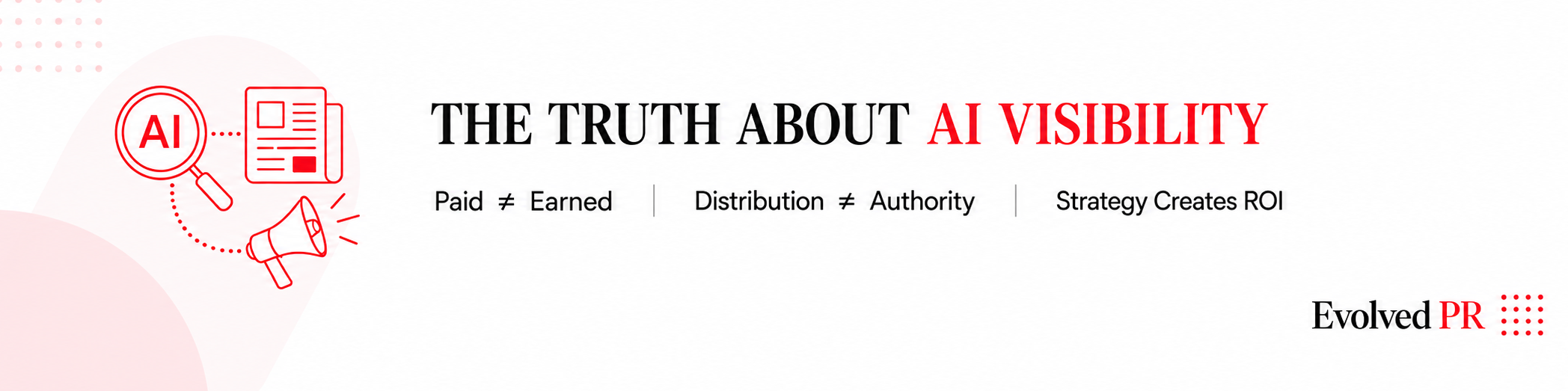
There is a lot of competing information out there on the benefits of paid placements, even newswires, have their arguments. What you may be seeing especially popular right now is the promises that these paid placements and newswires help boost your brand image and awareness on AI platforms. Even I have been getting emails from PR firms and paid placement agencies promising to get me “Higher placement in AI searches” by using their services. This is a real message I got on LinkedIn and again via email… twice!
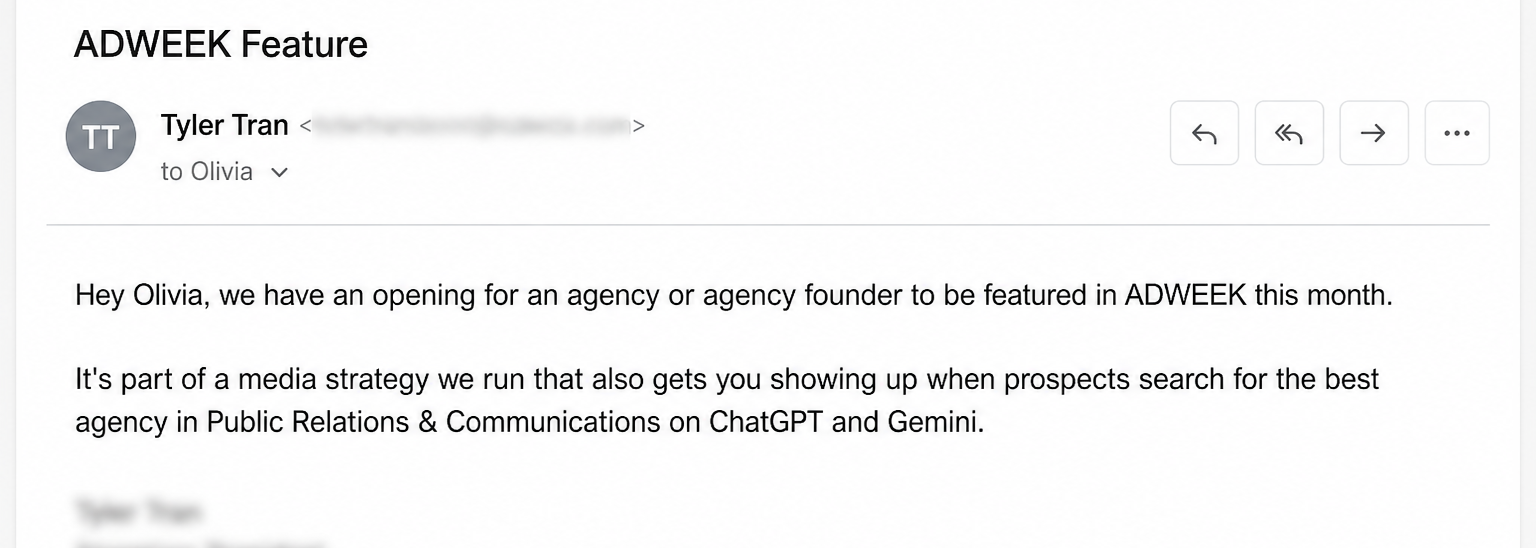
UGH. Worst tactic ever if you’re targeting someone who also does PR. And what’s more I understand the pro’s and con’s of what he is REALLY offering me. But many professionals are looking at that thinking “Wow! I didn’t know PR could do all that!? I might be open to this.”
There are several things about this that irks me… One is that it is completely misleading and misconstrues the facts. The other is that it makes the PR industry look really bad. The message he is sending is that one media placement is all you need to get your brand recognized and suddenly you’re going to come up higher in search engines – the same shady way people used to sell you SEO services. But those two things couldn’t be further from the truth. Lets go ahead and break it down…
Why is it Misleading?
Ai does indeed rank earned media very highly in the algorithm, but EARNED MEDIA, not paid media and newswires. Why? Because it recognizes the higher value of a traditional, reputable media outlet in a news story that wasn’t bought and paid for. Think about it, if a reader sees an overly complementary story with no real context or angle, they are probably going to be hesitant to believe it. But then when they scroll up and see “sponsored content” they think the brand is a joke.
The same is true with AI, because it accounts for owned (your content), shared (what others say or how they share your content), paid (marketing/advertising) and earned (traditional media coverage), and if you have done all your work right, it will assess a value to your company based on those elements. Not simply one placement, and especially not paid placements. The great news is though, the more media coverage you get, the more you will be consistently ranked higher because the algorithm places a higher emphasis on the praises of a real journalist writing a real story.
How do Paid Placements Really Work?
Paid placements are one thing only – advertisements packaged up to look like traditional PR exposure. The problem is that most readers know the difference because so many are labeled sponsored content or contributor status. So, then the agencies starting finding back alley ways to pay reporters to cover stories, and charge you (The user) even more of a premium to avoid those pesky labels. But in the end they always appear the same…
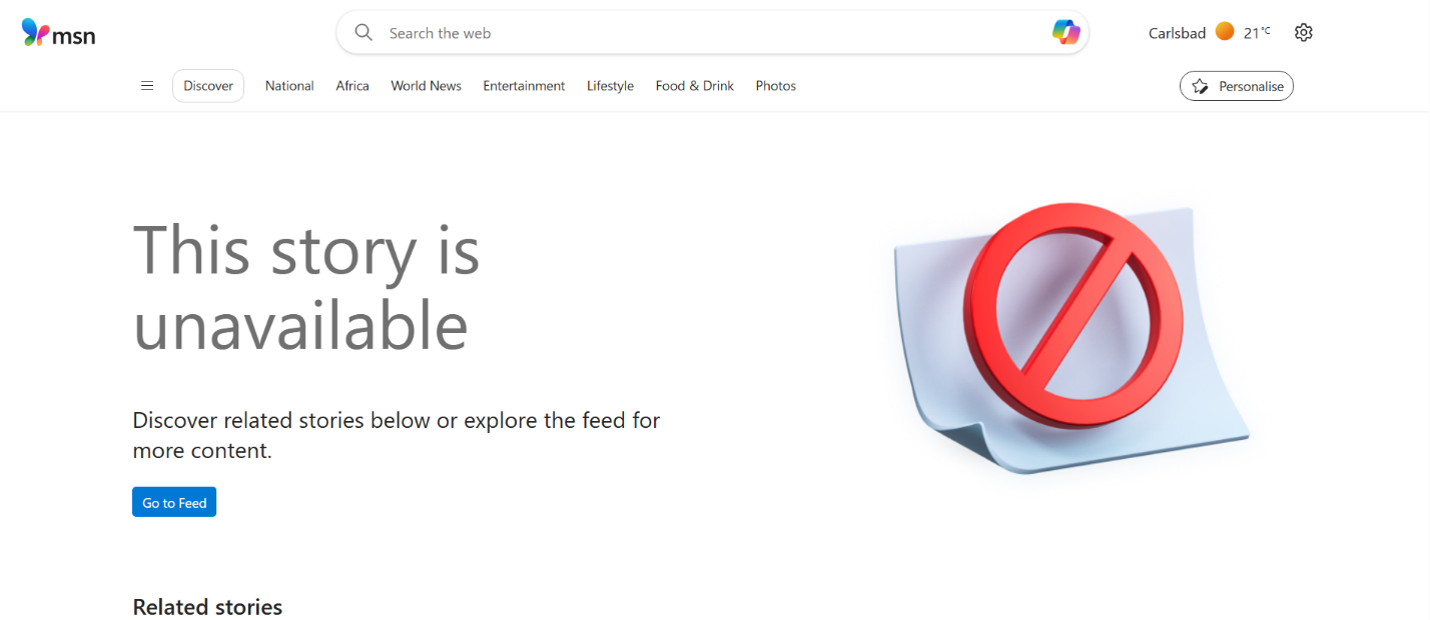
That is an image from an actual story that a client of mine paid for on MSN. Why are you seeing this? Because paid stories are highly unlikely to stay online for longer than 12 months. They simply take up too much bandwidth and get no real readership, so the editors remove them after a period of time… Then what!? No more AI ranking!
Want to know the real shady part? Agencies using this model often pocket a significant share of the fee, making it far easier, and more profitable to sell you paid placements than to do the time-intensive work to land legitimate media coverage. How much more are we talking? It could be substantial. I have seen USA Today go for $8,000 but the reporter only received a $3,000 paycheck. Want another one? How about Forbes for $15k when the reporter received $5k. One more? I have seen Wall Street Journal for $100k… you can bet that makes for a good day for that firm. It takes very little work (almost none), and while they realize it provides little actual value, they love the revenue stream it brings in. That’s why they want you keep buying more and more and more, likely in the name of “Your reputation.” Greed can be an all consuming thing.
But Newswires can do it…Right?
Not really. But they sure do like to promise they can. These platforms are up against a similar but varied issue that the paid placements are. They basically spam out your press release (whether it is good quality or not – but they most definitely wont tell you that) to hundreds or thousands of completely irrelevant sites where no real reporter is going to pick it up. It simply lives on that website as a press release from the company (Not from a journalist and with no real authority). Additionally, if you have never seen where some of these get placed, just take a look at some of the names and website my client got when the piece was geared around civil rights, culture, and women in the workplace…
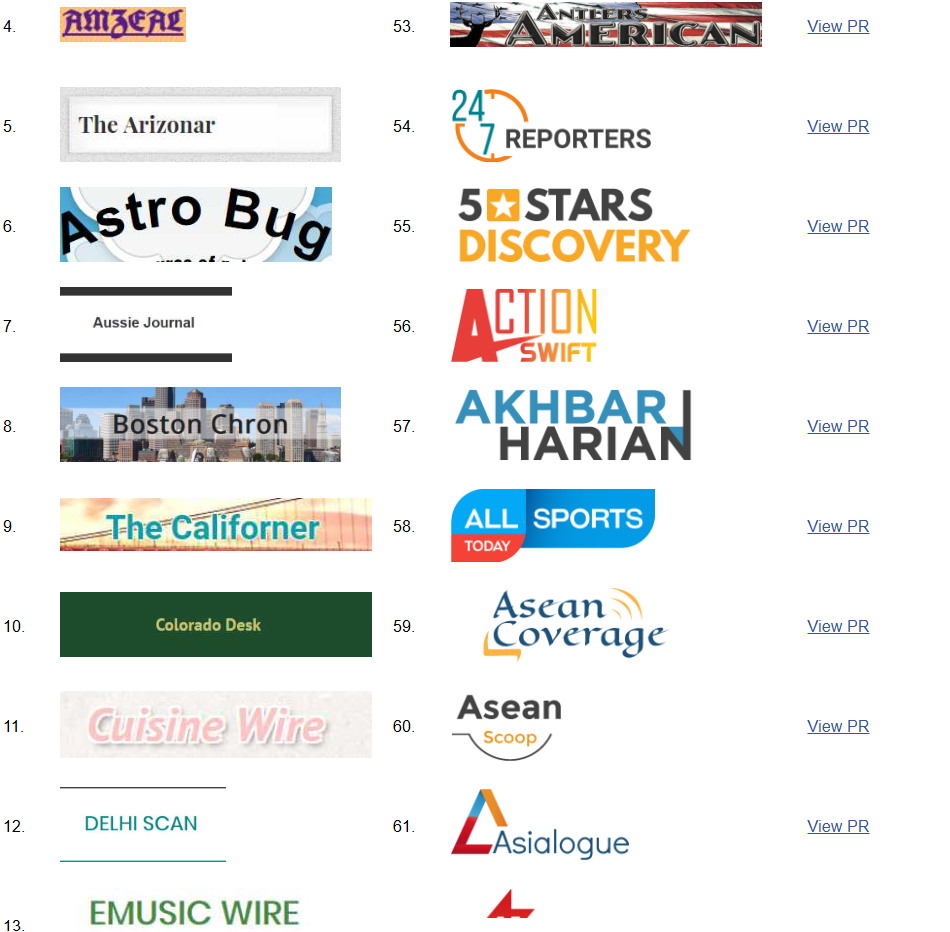
It goes on like that for about 250 outlets. None of these readers would give a hoot about the story, even if they were able to find it amongst the other junk. Even worse, she ended up paying about $1,000 extra for the distribution on this only to land in low domain authority sites.
How does Traditional PR do it if the Others Can’t?
Most experienced PR professionals won’t tell you that it takes one or two placements. And the more experienced agencies won’t even consider contracts smaller than 6 months. They realize it isn’t a quick fix and it doesn’t provide instant results. Anyone looking for “right now” and “immediate high-tier placements” are not understanding the actual strength and capabilities of real, long-term PR. The problem is, many clients want the “right now” and the “immediate top tier coverage” because they think that’s where the greatest ROI is. But in actuality, its where they waste the most money. If you want to know how to hire right person based on your needs, take a look at our Pricing Guide for New Buyers
So the longer you do it, the better your results. In PR, long-term results come from long-term efforts
How do I know When Its Empty Promises?
If you want to know if you are being sold on worthless PR, with empty promises, or grandiose and short-term time frames, here are a couple of things that even I hear from these individuals trying to make a case on why I should work with them:
A story in ADWEEK can get you ranked higher in AI platforms (No, it wont. It takes many many placements and they need to be consistent and from reputable sources over time before you can start getting REAL rankings and recommendation boosts)
Did you know that our newswire (enter any newswire company) can get you instant recognition and rank you higher on AI search engines (Only if someone is looking for your specific name. And even then it is only going to pop up with links to your press release – not a true trust building scheme)
We can get you in Forbes, which will immediately boost your business (Nope, this is a vanity placement hidden far within the far reaches of the company where no real reader would come across it)
We can guarantee coverage in hundreds of major media outlets within days. (What they are usually guaranteeing is automated press-release syndication, not legitimate editorial coverage earned through a journalist. One release copied across hundreds of nearly identical pages does not equal hundreds of meaningful placements.)
We can guarantee millions of impressions, putting your brand in front of a massive audience. (Again, this means mass distribution and often not with your actual audience. Millions of theoretical views mean nothing if the coverage never reaches the right audience or produces measurable business value.)
In Summary
Both paid placements and newswires have their place in the world, and on occasion (Such as a crisis when we need to get out OUR story) I may use either tactic to expand reach and strengthen a company’s searchable footprint. But they are tools, not miracles. Used in isolation, they are unlikely to create meaningful visibility, credibility, or business growth.
However, when incorporated into a complete, strategic PR campaign, even paid placements and newswire releases can support a larger objective and help move a company forward. At Evolved, we rarely use either tactic, but when we do, there is a damned good strategic reason and a clear result we expect it to produce.
Not sure whether the PR opportunity being pitched to you is a smart investment or an expensive vanity play? Send it to me at olivia@evolvedpr.com. I’ll give you an honest assessment of what it can realistically accomplish—and whether it is likely to deliver any meaningful return at all. Fair warning: I love talking PR, so you may get more insight than you bargained for.
About the Author